An Easy Way to See God
2023-07-01 heyumapati Hare Krishna
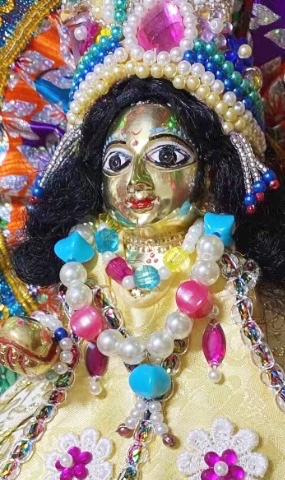
Naughty Krishna holding a piece of candy
调皮的奎师那拿着一块糖
I was born and raised Jewish. Throughout my childhood I heard again and again that a Jew never bows to a statue or worships one. Never. Nor does a Jew bow to any man.
我是土生土长的犹太人。在我的整个童年时期,我一次又一次地听到,犹太人从不向雕像顶拜或崇拜雕像。从来没有。犹太人也不会向任何人顶拜。
I opened the Bible and read about the Hebrew prophet Daniel in Babylon. Instead of worshiping the king, he worshiped God, so the king’s soldiers threw him into a lions’ den.
我翻开《圣经》,读到了希伯来先知但以理在巴比伦的故事。他不崇拜国王,却崇拜上帝,所以国王的士兵把他扔进了狮子坑。
Certain death. But God sent an angel to protect him, and he emerged unscathed.
肯定是必死无疑的。但上帝派了一个天使来保护他,他毫发无损。
Daniel’s friends—Shadrach, Meshach, and Abednego—refused to bow to a golden statue, so the king’s soldiers threw them into a fiery furnace.
但以理的朋友沙得拉,迈沙赫和亚伯尼歌拒绝向金像跪拜,于是国王的士兵把他们扔进了烈火窑中。
No one could survive. The heat was so great it even killed the soldiers. But when the king looked in, he saw not just three men but four. And the king understood: An angel had come to protect the friends. He ordered them released, and they came out unharmed.
没有人可以活下来。高温甚至杀死了士兵。但当国王往里看时,他看到的不只是三个人,而是四个。于是国王明白了:天使是来保护他的朋友们的。他下令释放他们,他们平安无事地走了出来。
And every Jewish child hears a certain legend about Abraham, the father of the Jews and Muslims, though you won’t find this in the Bible.
每个犹太孩子都听过一个关于亚伯拉罕的传说,他是犹太人和穆斯林之父,尽管你在《圣经》里找不到这个。
Abraham’s father, so it goes, made and sold idols for a living. But young Abraham knew better. He went to his father’s shop one day and smashed all the idols to pieces.
据说,亚伯拉罕的父亲以制造和出售圣像为生。但年轻的亚伯拉罕更清楚。一天,他去了他父亲的商店,把所有的圣像都打碎了。
“What have you done!” shouted his father.
“你都做了什么!”他的父亲喊道。
“But Father,” said Abraham, “if these idols are gods, why couldn’t they stop me?”
“但是父亲,”亚伯拉罕说,“如果这些偶像是神,他们为什么不能阻止我?”
Anyway, I had nothing to worry about. Who would ever ask me to bow before a man or a statue? Only Catholics did that.
不管怎样,我没什么好担心的。谁会要求我在一个人或一座雕像前顶拜呢?只有天主教徒才会这么做。
In 1966, at the age of twenty-nine, I took up Krishna Consciousness under the guidance of my future spiritual master Srila Prabhupada.
1966 年,在我 29 岁的时候,在我未来的灵性导师施瑞拉·帕布帕德的指导下,我开始学习奎师那知觉。
Life had changed me. I no longer cared about the prophets or the Bible. But after some weeks, the other followers started bowing whenever Prabhupada came into the room.
生活改变了我。我不再关心先知或者《圣经》。但是几个星期后,每当帕布帕德走进房间时,其他追随者就会开始顶拜。
But not me. Nothing to do with Judaism though. More like New-Yorkism. Orientals bowed. New Yorkers didn’t… except Catholics. And even Catholics didn’t really bow, you know. They just got down one one knee for a second.
但我没有。不过和犹太教无关。更像纽约主义。东方人鞠躬。纽约人不…除了天主教徒。你知道,即便天主教徒也没有真正跪拜。他们只是单膝下跪了一秒钟。
My reluctance changed on the night of my initiation. As I kneeled before Prabhupada, he motioned for me to bow. And I had to. So I touched my forehead to the floor.
在我启迪的那个晚上,我的不情愿改变了。当我跪在帕布帕德面前时,他示意我顶拜。我不得不这么做。所以我用额头碰了碰地板。
Worse yet, I found out that devotees of Krishna bowed before statues. Now that indeed brought back visions of fiery furnaces and lions’ dens.
更糟糕的是,我发现奎师那的奉献者在雕像前顶拜。这确实使我想起了烈火窑和狮子穴的景象。
Prabhupada refused to call them statues, though. He called them deities. A statue, he said, had no life, just a dead piece of stone.
然而,帕布帕德却拒绝称他们为雕像。他称他们为 deity(神像)。他说,雕像没有生命,只是一块死石头。
By calling them deities, Prabhupada stretched the dictionary meaning a bit, but no one ever brought that up because English doesn’t have the right word.
通过称他们为神像,帕布帕德稍微扩展了字典的意思,但没有人提出这一点,因为英语中没有合适的词。
Statue? Deity? Why the difference?
雕像?神像?有什么区别?
Because the deity lives and feels.
因为神像是活的,是有感觉的。
The Catholics may call them statues, but their church has many stories of the “statues” of Mary shedding tears and Jesus bleeding from where the soldiers wounded him on the cross. And I have seen photos.
天主教徒可能称他们为雕像,但他们的教堂有许多关于玛利亚流泪和耶稣在十字架上被士兵打伤而流血的“雕像”的故事。我也看过照片。
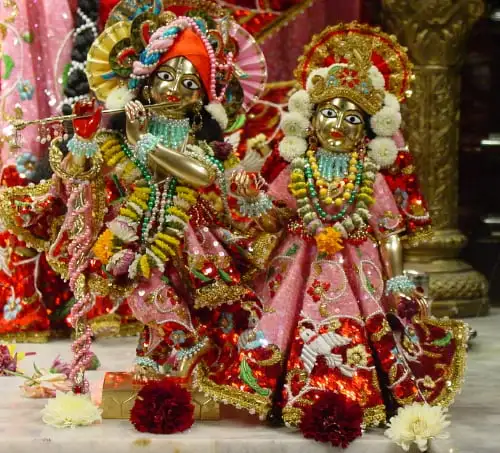
The Hare Krishna tradition also has its stories. The deity named Saksi Gopal walked across India when a young brahmana asked him to.
哈瑞·奎师那的传统也有它的故事。一个年轻的布茹阿玛纳请求名叫 Saksi Gopal 的神像穿越了印度。
“But how do you expect me to walk?” asked the deity on the altar. “I am a statue.”
“但你怎么能要求我走路?”神坛上的神像问道。“我是一尊雕像。”
“If you can talk, you can walk,” said the brahmana. “And I know you are not a statue. You are directly [Krishna] the son of King Nanda.”
“如果你能说话,你就能走路,”这个布茹阿玛纳说。“而且我知道你不是雕像。你就是[奎师那]南达王的儿子。”
So the deity agreed and walked across India with the brahmana. His mere presence would bear witness to an agreement. And everyone knew that the deity—too heavy to carry— had walked.
于是神像同意了,并和布茹阿玛纳一起穿越了印度。祂的出现足以证明了祂是这个协议的见证人。每个人都明白了——神像走路了,因为这么重没有人可以带他来。
And if you ever go to Orissa in India’s east, you can visit this deity. His name is Saksi Gopal (‘Krishna the Witness’).
如果你去印度东部的奥瑞萨邦,你可以拜访这尊神像。祂的名字是 Saksi Gopal(“见证者奎师那”)。
Photos also offer proof. On occasion, devotees have shown me photos taken a year apart of one deity or another. And the photos always showed the same thing: the deity had grown more robust, the skin tone had deepened, the expression had changed.
照片也提供了证据。有时,奉献者会给我看相隔一年拍摄的某个神像的照片。而这些照片总是显示同样的事情:神像变得更健壮了,肤色加深了,表情也改变了。
But something that looks like a statue and feels cold to the touch like a statue, something that, like a statue, never moves—how can it have life?
但是一个看起来像雕像,摸起来又像雕像一样冰冷的东西,一个像雕像一样永远不会动的东西——它怎么会有生命呢?
All right. To begin with, we often call Krishna absolute. But what does that mean?
好吧。首先,我们经常称奎师那为绝对的。但这是什么意思呢?
It means that every part of Krishna’s body has all of Krishna’s power. Krishna can see with his hand, right? If not, how could we call him God?
意思就是奎师那身体的每一部分都拥有奎师那的全部力量。奎师那能用手看,对吧?如果不能,我们怎么能称祂为上帝呢?
Krishna impregnates the goddess Maya just by looking at her. And when the devotee asks Krishna to accept a plate of food, Krishna eats it just by hearing the devotee’s words of devotion. And who can say God cannot?
奎师那仅仅通过看女神玛雅就使她受孕。当奉献者要求奎师那接受一盘食物时,奎师那仅仅通过听到奉献者奉爱的话语就把它吃掉了。而谁能说上帝不能呢?
And like the parts of Krishna’s body, his name also has all the power of the whole Krishna. Thus the devotee constantly sings Krishna’s name or repeats it on a string of beads as a mantra. And feels ever-increasing pleasure.
就像奎师那身体的各个部分一样,祂的名字也拥有整个奎师那的全部力量。因此奉献者不断地唱奎师那的名字,或者在一串念珠上作为曼陀罗重复它。并感受到越来越多的快乐。
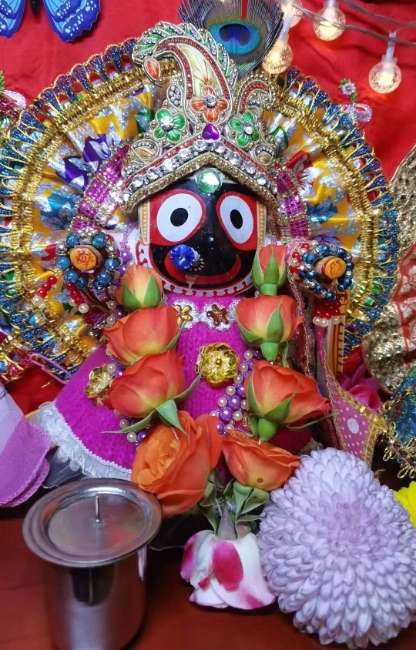
The same goes for Krishna’s form though it may look like an ordinary picture or statue. But the devotee can see the difference. Why? Because he knows the secret.
奎师那的形体也是如此,尽管它可能看起来像一幅普通的照片或雕像。但是奉献者可以看到不同之处。为什么?因为他知道这个秘密。
A secret? Yes. Devotion makes the difference.
一个秘密?是的。奉爱使人与众不同。
“I worship Govinda, the primeval Lord, who is Syamasundara, Krishna Himself with inconceivable innumerable attributes, whom the pure devotees see in their heart of hearts with the eye of devotion tinged with the salve of love. (Sri Brahma Samhita 5.38)
“我崇拜原始的主勾文达,祂是夏玛逊达尔,奎师那本人,具有不可思议的无数品质,纯粹的奉献者在他们的内心深处用带着爱的药膏的奉献之眼看到祂。(《布茹阿玛·萨蜜塔》 5.38)”
When Krishna walked the face of the earth, many people saw him, but only the devotees saw his glory.
当奎师那在地球上行走时,许多人看到了祂,但只有奉献者看到了祂的荣耀。
Why? Yes. Devotion.
为什么?你知道。是奉爱。
Anyone with eyes can see God. Just have to look at a picture of Krishna. The seeing is easy. But Knowing what you see? That comes from Krishna. Krishna reciprocates. Throw him the ball, and he will throw it back to you.
任何有眼睛的人都能看见上帝。只要看看奎师那的照片。看很容易。但是知道你看到了什么吗?奎师那是投桃报李的。
“If one offers Me with love and devotion a leaf, a flower, a fruit or water, I will accept it.
“以爱和奉献之心,无论向我供奉一片叶,一朵花,一个水果,还是一杯水,我都接受。
Whatever you do, whatever you eat, whatever you offer or give away, and whatever austerities you perform—do that, O son of Kunti, as an offering to Me. (Bhagavad-Gita 9.26,27)
无论你做什么,吃什么;无论你供奉什么,施舍什么;无论你做什么苦行,Kunti 之子啊!你都应该当作对我的奉献去履行(《博伽梵歌》 9.26,27)”
So offer him some fruit, some incense, some clothes. And he will let you see. Could you ask for anything easier?
所以给祂一些水果,一些香,一些衣服。祂会让你看见。你还能要求更简单的吗?
—Umapati Swami, July 1, 2023
—乌玛帕提·斯瓦米 2023.7.1
Eternally touching my head to the floor at the lotus feet of my spiritual master, Srila Prabhupada, for showing me all this.
永恒的顶拜我的灵性导师施瑞拉·帕布帕德,他向我展示了这一切。

(Note: The opinions expressed in this article are my own and do not necessarily reflect the opinions of any organization or any other person.)
(注:本文所表达的观点仅为我个人观点,并不一定反映任何组织或个人的观点)
Photo top: Naughty Krishna holding a piece of candy (Jishnu Das)
Write to me: hoswami@yahoo.com
© Umapati Swami 2023
Scriptural passages © Bhaktivedanta Book Trust

Srila Prabhupada
His Divine Grace A.C. Bhaktivedanta Swami Prabhupada is the teacher who brought Krishna Consciousness from India to the West and then to the rest of the world. He is the founder of the worldwide Hare Krishna Movement as well as the author and compiler of many works of Vedic knowledge. He left this world in 1977.

Umapati Swami
One of the first American devotees of the Hare Krishna Movement, he became Srila Prabhupada’s disciple in 1966. Since then, he has preached Krishna Consciousness in many countries and is the author of “My Days with Prabhupada,” available from Amazon. Now 86 years old, he has started this blog to share what he has learned.