A Meditation on Trees and Krishna
2024-02-09 heyumapati Hare Krishna
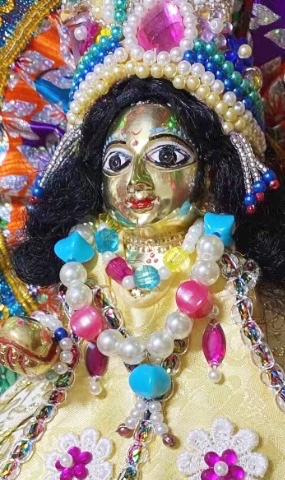
调皮的奎师那拿着一块糖
Poems are made by fools like me
But only God can make a tree
(Joyce Kilmer)诗歌是像我这样的傻瓜所写
但只有上帝可以造树
(乔伊斯·基尔默)
I came across these lines on the internet the other day. So God makes the trees? Well he does, doesn’t he?
前几天我在网上看到了这些诗句。所以上帝真的创造了树木吗?是的,他确实做到了。
Hmm. Maybe Kilmer was on to something. After all, I had always taken trees for granted.
或许基尔默发现了什么。毕竟,我一直认为树木是理所当然的。
So I began to wonder about trees and Krishna. And I even learned something about the planets.
我开始考虑树木和奎师那是什么关系。我甚至学到了一些关于行星的知识。
(By the way, does the name Joyce sound feminine to your ear? But it belonged to a handsome young American man, a prolific poet. He died in France at the age of thirty-one fighting in World War I.)
(顺便提一下,乔伊斯这个名字听起来是不是很女性化?但它属于一位年轻英俊的美国男人,一位多产的诗人。他在一战中牺牲于法国,年仅31 岁。)
But getting back to God making trees, my thoughts turned to a narrative about the great devotee Narada Muni. He never stops moving, going here and there in the material and spiritual worlds. He has no restrictions.
回到上帝创造树木的话题,我想到了伟大的奉献者纳茹阿达·穆尼。他不停地在物质世界和灵性世界之间穿梭,无拘无束。
He carries his veena, a stringed instrument, to play while he constantly sings the names of the Lord.
他带着他的维纳——一种弦乐器,一边弹奏,一边不断地唱诵主的名字。
When Will I Be Saved?
我何时才能得到灵性的救赎?
One day, as Narada was about to set off for the spiritual world, he met a brahmana priest. “Are you going to meet the Lord?” asked the brahmana. “Will you please ask him when I will get my salvation.”
有一天,当纳茹阿达准备前往灵性世界时,遇到了一位婆罗门祭司。“你要见主吗?”婆罗门问道,“请问问他,我何时能得到救赎。”
“All right,” said Narada. “I will ask Him”
“好的,”纳茹阿达说,“我会问他的。”
As Narada went on his way, playing his veena and singing Krishna’s names, he met a cobbler sitting under a large banyan tree mending shoes. “Are you are going to see God?” asked the cobbler. “Will you please ask him when my salvation will come.”
当纳茹阿达弹着他的维纳,唱着奎师那的名字前往灵性世界的途中,他遇到了一位鞋匠,他在一棵大榕树下修补鞋子。“你要去见上帝吗?”鞋匠问道,“请帮我问问我的救赎何时会到来。
When Narada Muni arrived in the spiritual Vaikuntha planets, he asked Narayana, the Lord, about the brahmana and the cobbler.
当纳茹阿达到达灵性外昆塔星球时,他向主纳茹阿央纳询问了婆罗门和鞋匠的事。
“The cobbler will come here to me when he leaves his present body,” said Narayana.
“鞋匠在离开现在的躯体后会来到我这里,”纳茹阿央纳说。
“What about the brahmana?” Narada asked.
“那婆罗门呢?”纳茹阿达问道。
“He will have to remain there for many births,” said Narayana. “I do not even know when he will come.”
“他得再经历很多次出生,”纳茹阿央纳说,“我甚至不知道他何时会来。”
“What?” thought Narada.“How can this happen? How can a cobbler attain liberation before a brahmana?”
“什么?”纳茹阿达心想:“这怎么可能?一个鞋匠怎么可能比婆罗门更早得到解脱?”
He turned to the Lord. “I can’t understand this mystery,” he said.
他转向主说:“我无法理解这个奥秘。”
Pulling an Elephant through the Eye of a Needle
将大象穿过针眼
“You will see,” said Narayana. “They will ask what I was doing. Then tell them I was threading the eye of a needle with an elephant.”
“你会知道的”,纳茹阿央纳说:“他们会问,我在做什么。你就告诉他们,我正在把一头大象穿过针眼。”
Narada returned to earth and met the brahmana. “Have you seen the Lord?” asked the brahmana. “What was he doing?”
纳茹阿达回到地球,见到了婆罗门。“你见过主了吗?”婆罗门问道,“他在做什么?”
“He was threading an elephant through the eye of a needle,” said Narada.
“他正在把一头大象穿过针眼,”纳茹阿达说。
“What nonsense!” said the brahmana “I don’t believe it.”
“胡说八道!”婆罗门说,“我不相信。”
Narada understood: The brahmana had no faith. All he could do was read books.
纳茹阿达明白了:这个婆罗门没有信心。他能做的只是读书。
Narada went on to meet the cobbler under the banyan tree. “Have you seen the Lord?” asked the cobbler. “Tell me, What was he doing?”
纳茹阿达接着去找榕树下的鞋匠。“你见过主了吗?”他问道,“告诉我,他在做什么?”
“He was threading an elephant through the eye of a needle,” Narada replied.
“他正在将一头大象穿过针眼,”纳茹阿达回答。
The cobbler began to weep. “Oh, my Lord is so wonderful,” he said through his tears. “He can do anything.”
鞋匠开始哭泣。他眼含泪水说道“哦,我的主太奇妙了,他无所不能。”
“You mean you believe it?” asked Narada. “You believe the Lord can push an elephant through the eye of a needle?”
“你是说你相信吗?”纳拉达问道,“你相信主能让大象穿过针眼?”
“Why not?” said the cobbler. “Of course I believe it.”
“为什么不相信?”鞋匠说,“我当然相信。”
“How is that?”
“你怎么会相信呢?”
“As I sit under this banyan tree,” said the cobbler, “I see figs fall from the branches every day. And each fig has many little seeds. And each seed contains a banyan tree like this large, spacious tree we’re sitting under.
“当我坐在这棵榕树下,”鞋匠说,“我看到无花果每天都从树枝上掉下来。每个无花果都有许多小种子。每一粒种子里都有一棵榕树,就像我们坐在下面的这棵大榕树。
“This big spreading tree, and it came out of a seed no bigger than a pinhead. So if the Lord can put such a big tree into a tiny seed, why can’t he thread an elephant through the eye of a needle?”
“这棵蔓延的大树,由一棵不比针头大的种子长成。所以,如果主能把这么大的树放进这么小的种子里,为什么他不能让大象穿过针眼呢?”

Srila Prabhupada on faith and trees… and planets:
施瑞拉·帕布帕德谈信心和树木……以及星球:
So this is called faith. It is not a question of blindly believing. There is reason behind the belief. If Krishna can put large trees inside little seeds, is it so astounding that He is keeping all the planetary systems floating in space through His energy? (Raja Vidya)
这就是信心。这不是盲目相信的问题。这种信心背后是有原因的。如果奎师那能把大树放进小种子里,他通过自己的能量让所有行星系统漂浮在太空中,这有什么惊人的呢?(《茹阿佳·威迪亚》)
Eavesdropping on the Bhagavad-Gita
偷听《博伽梵歌》
And speaking of banyan trees, did you know that a banyan listened in when Krishna spoke the Bhagavad-Gita?
说到榕树,你知道在奎师那讲述《博伽梵歌》时,有一棵榕树也在听吗?
Yes. It came as a surprise to me too. I already knew that as the Battle of Kurukshetra was about to begin, Krishna drove the chariot between the two armies. But I didn’t know that he stopped next to a banyan tree, where he spoke the Bhagavad-Gita to the distraught Arjuna.
是的,这也让我感到惊讶。我已经知道,在库茹之野之战即将开始时,奎师那驾驶战车在两军之间。但我并不知道,祂在一棵榕树旁边停了下来,在那里祂向心烦意乱的阿尔诸那讲述了《博伽梵歌》。
Five thousand years later, the tree still stands at that spot, now known as Jyotisar, ‘The Essence of Light.’ And you can go there too. Just take the train from Delhi to Kurukshetra, the same as I did.
五千年后,这棵树仍然屹立在那里,现在被称为“光之精粹”。你也可以去那里。和我一样,从德里坐火车到库茹之野。
And you can go into the town and visit the Birla temple with its white stone carving of the chariot pulled by horses while Arjuna and Krishna sit in their seats. And go inside and bow to the life-size carving of Arjuna kneeling while Krishna speaks the Bhagavad-Gita.
然后你可以进城参观比尔拉神庙,那里有阿尓诸那和奎师那坐在战车上的白色石雕。走进去,向跪着听《博伽梵歌》的真人大小的阿尓诸那的形体顶拜。
(I hope I got the details right. It’s been forty-seven years.)
(我希望我的这些细节是对的。已经过去了 47 年了。)
The Little Boy and the Supreme Lord
小男孩与至尊主
Afterwards, you can walk over to the town center and visit the temple of Surya-Narayana, the sun god. Then go next door to a temple not big enough to walk into and stand in the doorway to look at the big smiles on the faces of the little-boy devotee Dhruva Maharaja and the Supreme Lord, Narayana, as they face each other.
之后,你可以去镇中心参观太阳神苏尔亚·纳茹阿央纳的庙。然后去隔壁一个小到无法进入的庙,站在门口,看小男孩奉献者朱瓦·玛哈茹阿哲和至尊主纳茹阿央纳面对面时脸上的灿烂笑容。
But the first stop should be the ISKCON center there, which I have never seen.
但第一站应该是那里的 ISKCON 中心,我从未见过。
Now let’s take the train back to Delhi and hop on a plane eastward all the way to Jagannath Puri on the Bay of Bengal.
现在让我们坐火车回德里,然后乘飞机向东飞往孟加拉湾的贾格纳特·普瑞。
After we visit the ISKCON temple, we’ll walk a bit to see a miraculous tree called Siddha Bakula. “Siddha” means perfect, and the bakula tree’s English name is Spanish cherry or bulletwood. A tall evergreen, it produces fragrant flowers and edible fruit also used as medicine.
参观完 ISKCON 庙后,我们会走一点路去看一棵叫希达·巴库拉的神奇的树。“希达”意味着完美,巴库拉树的英文名是西班牙樱桃或子弹木。这是一种高大的常青树,开着芬芳的花朵,果实可食用,也可入药。
A Toothbrush for God
给上帝牙刷
One day, the priests at the temple of Jagannatha offered a bakula twig to the Lord for a toothbrush.
有一天,贾格纳特庙的祭司们给主供奉了一根巴库拉树枝作为牙刷。
“Wait!” you say. “A toothbrush for God? What could the Supreme Lord of all the universes ever want with a toothbrush? Toothbrushes are for creatures like us who have teeth and eat food.”
“等等!”你说,“给上帝的牙刷?宇宙至高无上的主怎么会需要牙刷?牙刷是给像我们这样有牙齿和吃东西的生物用的。”
Ah, my friend, but aren’t you forgetting something? Krishna also has teeth, and Krishna also eats. Why not offer him the comfort of a toothbrush? It’s the least we can do.
啊,我的朋友,但你是不是忘了什么了?奎师那也有牙齿,奎师那也吃东西。为什么不给他一把舒适的牙刷呢?这是我们最起码能做的。
Later, the priests gave the bakula toothbrush to Lord Chaitanya as prasad or mercy. Temple priests give objects like clothes or toothbrushes used by Krishna to devotees as prasad to use or worship or even eat. Yes, devotees also eat prasad, foodstuffs previously offered to Krishna.
后来,祭司们将巴库拉牙刷作为普沙得或仁慈,送给了主柴坦尼亚。庙宇祭司们将奎师那用过的衣服、牙刷等等作为普沙得送给奉献者使用、崇拜甚至食用。是的,奉献者也吃普沙得,即供奉过给奎师那的食物。
And when you go to Jagannath Puri, don’t forget to feast on some of Lord Jagannatha’s prasad. You may have to pay someone a few rupees to get it for you, though, as only native-born Hindus may enter the temple.
当你去贾格纳特·普瑞时,别忘了品尝一些主贾格纳特的普沙得。你可能需要付给某人一些卢比让他们帮你得到,因为只有土生土长的印度教徒才能进入庙里。
Lord Chaitanya went every day to visit his devotee Haridas Thakur. Haridas, though a great devotee, could not enter the Jagannath temple because of his birth in a Muslim family.
主柴坦尼亚每天都会去看望他的奉献者哈里达斯·塔库尔。尽管哈里达斯是一位伟大的奉献者,但由于他出生在一个穆斯林家庭,所以不能进入贾格纳特庙。
But Krishna himself, as Lord Chaitanya, would go to see his dedicated servant Haridas. Therefore devotees say that Haridas could not go to see Jagannath, but Jagannath would go to see Haridas.
但奎师那本人,作为主柴坦尼亚,会去看望他忠诚的仆人哈里达斯。因此,奉献者们说,哈里达斯不能去看贾格纳特,但贾格纳特会去看哈里达斯。
From a Toothbrush to a Tree
从牙刷成为树
After receiving the bakul toothbrush, Lord Chaitanya went to Haridas’s place and planted the toothbrush in the ground. Soon the twig grew into a tall straight tree offering shade where Haridas often sat to chant Hare Krishna.
收到巴库拉牙刷后,主柴坦尼亚去了哈里达斯的地方,把牙刷种在地里。很快,树枝长成了一棵高大耸直的树,为哈里达斯经常坐着唱诵哈瑞·奎师那提供了阴凉。
After Haridas left this world, a devotee named Jagannath Swami lived at that place. Once, as the time for Jagannath’s chariot festival approached, the king’s men came to cut down the tree to make wheels for Jagannath’s chariot.
哈里达斯离开这个世界后,一位名叫贾格纳特·斯瓦米的奉献者住在那里。有一次,随着贾格纳特战车节的临近,国王的人来砍树做战车轮子。
“Do not cut down this tree,” the swami told them. “It is a holy tree, planted by Lord Chaitanya and used by Haridas.”
“不要砍这棵树,”斯瓦米告诉他们,“这是一棵神圣的树,是由主柴坦尼亚种下,而且服务了哈里达斯。”
A Tree Without Wood
没有木头的树
To no avail. The next day the king’s men came to cut down the tree. But they stopped when they saw a miracle. The tall straight tree had now bent over, winding along the ground. On the bent section, the tree had partly cracked open, revealing a hollow inside covered only with a layer of bark. It would yield no wood.
没有用。第二天,国王的人来砍树。但他们停了下来,因为他们看到了一个奇迹。那棵高大直立的树现在弯曲在地面上。在弯曲的部分,树身部分裂开,露出里面的空洞,只有一层树皮覆盖。它无法再用作木材
了。
Shouldn’t it have died in that condition? But no. It had all the signs of life, leaves and all.
在那种情况下它不是应该死了吗?但没有。它仍然有生命的迹象,有叶子等等。
The hollow tree still lives. Every year in April, on the anniversary of the planting, the locals hold a festival called Planting the Toothbrush Tree. They bathe the tree with 108 pots of water and sing songs to glorify Lord Chaitanya and his devotees like Haridas Thakur.
空心的树仍然活着。每年四月,在种植周年纪念日,当地人会举行一个名为“种植牙刷树”的节日。他们会用 108 罐水给树沐浴,并唱赞美主柴坦尼亚和他像哈里达斯·塔库尔这般的奉献者的歌曲。
When you go to Jagannath Puri, you too can offer obeisances to the Siddha Bakul tree. You can also go to the samadhi or resting place of Haridas Thakur. The samadhi also encompasses a complete temple.
当你去贾格纳特·普瑞时,你也可以向希达·巴库拉树致敬。你也可以去哈里达斯·塔库尔的萨马迪或他休息的地方。萨马迪也包括一座完整的庙宇。
Each time I went there, my eye stopped at a picture on the wall. How nice to find myself in India looking at a photo of Radha and Vrindaban Chandra, the deities in ISKCON’s temple in West Virginia, U.S.A.
每次我去那里,我的目光总会停留在墙上的一张照片上。当我在印度,看到美国西弗吉尼亚州 ISKCON 庙的神像茹阿达和温达班·禅卓的照片时,感觉真是太好了。
The first time I went to Jagannath Puri, the samadhi-temple stood on the beach. The second time I went, I found it a little farther back. But no one had moved the samadhi. The edge of the sea had moved itself, as seacoasts often do.
我第一次去贾格纳特·普瑞时,萨马迪庙就坐落在海滩上。第二次去时,我发现它稍微往后了一些。但没有人移动过萨马迪。海的边缘自己移动了,就像海岸线经常做的那样。
I could say more about trees and Krishna, but the topic knows no limits. But I’ll say this: I don’t take trees for granted any more, not even a tiny fig seed.
我可以再说更多关于树木和奎师那的事,但这个话题是无限的。但我要说的是:我不再认为树木是理所应当的,即使是一颗微小的无花果种子。
⁓Umapati Swami, February 10, 2024, Chinese New Year
⁓乌玛帕提·斯瓦米,2024 年 2 月 10 日,中国新年
Eternally touching my head to the floor at the lotus feet of my spiritual master, Srila Prabhupada, for showing me this.
永恒的顶拜我的灵性导师施瑞拉·帕布帕德,他向我展示了这一切。
NOTES:
注释:
My thanks to my godbrother and friend Yogesvara Das for suggesting that I write an article about trees.
感谢我的神兄弟和朋友 Yogesvara Das 建议我写一篇关于树木的文章。
Thanks also to my godbrother and friend Satyaraja Das for providing the information about Siddha Bakul.
也感谢我的神兄弟和朋友 Satyaraja Das 提供关于希达·巴库拉的信息。
The opinions expressed in this article are my own and do not necessarily reflect the opinions of any organization or any other person.
本文中表达的观点仅代表我个人,不一定反映任何组织或任何其他人的观点。
Scriptural passages © Bhaktivedanta Book Trust
The verse at the beginning of the article is from “Trees” by Joyce Kilmer.
Photo top: Naughty Krishna holding a piece of candy (Jishnu Das)
Write to me: hoswami@yahoo.com
© Umapati Swami 2024
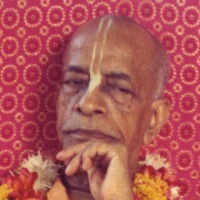
Srila Prabhupada
His Divine Grace A.C. Bhaktivedanta Swami Prabhupada is the teacher who brought Krishna Consciousness from India to the West and then to the rest of the world. He is the founder of the worldwide Hare Krishna Movement as well as the author and compiler of many works of Vedic knowledge. He left this world in 1977.
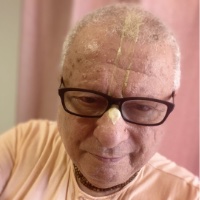
Umapati Swami
One of the first American devotees of the Hare Krishna Movement, he became Srila Prabhupada’s disciple in 1966. Since then, he has preached Krishna Consciousness in many countries and is the author of “My Days with Prabhupada,” available from Amazon. Now 86 years old, he has started this blog to share what he has learned.