Eat Your Way to Wisdom
2023-05-09 heyumapati Hare Krishna
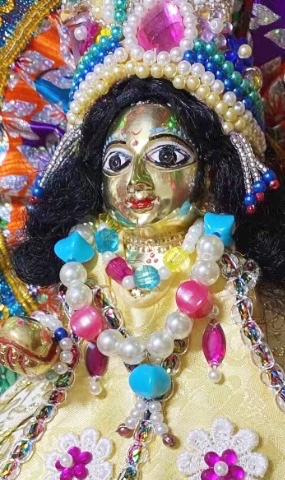
拿着糖果的淘气的奎师那
One afternoon in the 70s or 80s, I wandered from shelf to shelf in a bookstore in Paris’s Latin Quarter. The sound of the cars outside on the Boulevard Saint Michel drifted through the door, and the thin subtle smell of books lingered around the shelves.
70年代或80年代的⼀个下午,我在巴黎拉丁区的⼀家书店⾥从⼀个书架逛到另⼀个书架。外⾯圣⽶歇尔⼤道上的汽车声飘进门来,淡淡的书⾹萦绕在书架上。
Soon I came upon a book of proverbs from around the world. “Interesting,” I thought. So I bought it, took it home, and began reading it.
很快我发现了⼀本世界各地的谚语的书。“有意思,”我想。所以我买了它,带回家,开始阅读。
A certain proverb from Mongolia caught my eye: “The wise man talks about what he sees and hears; the fool talks about what he eats and drinks.”
⼀句来⾃蒙古的谚语引起了我的注意:“智者谈论他的见闻;愚者谈论他的饮⾷。”
I laid the open book on a table, leaned back in my chair, and looked up at my wall and the picture of Lord Krishna playing with a parrot. “That’s a good proverb to remember,” I thought.
我把打开的书放在桌上,靠在椅背上,抬头看着我的墙和奎师那与鹦鹉玩耍的照⽚。“这是⼀句值得记住的好谚语,”我想。
At that time, I worked as an accountant for a company in Paris. Now all employees in France have the right to a month’s vacation every year. Really. A whole month. And with pay. So when summer came, my co-workers disappeared, one by one, and came back a month later.
那时,我在巴黎的⼀家公司做会计。你看在法国所有员⼯每年都有权享受⼀个⽉的假期。真的。整整⼀个⽉。还有⼯资。所以夏天来临时,我的同事⼀个接⼀个都不见了,⼀个⽉后又回来了。
Me too. I waved bye-bye to my accounting journals and bank statements and disappeared for a month.
我也是。我挥⼿告别我的会计⽇志和银⾏对账单,消失了⼀个⽉。
But during the times when I sat there and scratched numbers in the debit and credit colums, I heard the same conversation repeated over and over again. And I would laugh under my breath.
但是,当我坐在那⾥,在借⽅和贷⽅栏⾥划数字的时候,我听到这同样的对话⼀遍又⼀遍地重复。我会暗⾃发笑。
“How was your vacation?”
“你的假期过得怎么样?”
“Oh, it was wonderful. The first night, we ate [this]. The second night, we ate [that]. The third night, we ate [this].”
“哦,太棒了。第⼀天晚上,我们吃了[这个]。第⼆天晚上,我们吃了[那个]。第三天晚上,我们吃了[这个]。”
And on and on it went. A gulp-by-gulp account of every leaf of lettuce and spoonful of gravy the person had ingested during the month. And I would remember my Mongolian proverb: “The fool talks about what he eats and drinks.”
就这样⼀直持续下去。⼀⼜⼀⼜地记录这个⼈在⼀个⽉内吃下的每⼀⽚⽣菜叶⼦和每勺⾁汁。我会记得我的蒙古谚语:“傻⽠谈论他吃什么喝什么。”
My dear co-worker, did you go on vacation just to eat? Then why bother going anywhere? With the money you save by not traveling, you could dine at the finest restaurants in Paris. Makes more sense, doesn’t it?
我亲爱的同事,你去度假只是为了吃吗?那为什么还要去别的地⽅呢?⽤你不旅⾏省下的钱,你可以在巴黎最好的餐厅⽤餐。更有道理,不是吗?
Want to try something posh? Why not go all the way upscale to Maxim’s? Yes, and thrill your tongue with the same steak and wine-marinated rooster and baked snails as on the plates of the visiting kings and queens at the tables around you.
你要试试豪华的?那为什么不去马克西姆的⾼档餐厅呢?是的,⽤同样的⽜排、红酒炖鸡和烤蜗⽜来刺激你的⾆头,就像你周围桌⼦上来访的国王和王后盘⼦⾥的⼀样。
But fine dining has its cost. Money, of course, but karma too. Srimad Bhagavatam tells us:
但是美⾷是有代价的。钱,那是⾃然的,但也有因果报应。《圣典博伽⽡谭》告诉我们:
“O ruler of the citizens, my dear King, please see in the sky those animals which you have sacrificed, without compassion and without mercy, in the sacrificial arena. All these animals are awaiting your death so that they can avenge the injuries you have inflicted upon them. After you die, they will angrily pierce your body with iron horns.(4.25.7-8)
“国民的统治者啊,我亲爱的君王,请看祭祀场上空被你无情献祭的那些动物吧。所有那些动物都在等待你的死亡,以找你报仇。报复你强加在它们身上的痛苦。你死后他们将用铁刺愤怒地刺穿你的身体。”(4.25.7-8)
Srila Prabhupada explains:
施瑞拉·帕布帕德解释道:
“Such punishment of animal killers may take place under the jurisdiction of Yamaraja [the lord of death] on [his] planet. In other words, one who kills an animal or who eats meat undoubtedly acquires a debt to the living entity who has contributed his body. …The meat-eater must pay his debt by contributing his own body to be consumed in the next life.
“对磨宰动物者的这种惩罚,在死亡之主的星球上,亚玛茹阿哲的监督下执行。换句话说,屠宰动物的人或食肉者,无疑亏欠于为满足食肉者而献身的生物体。…食肉者来生必须献出自己的身体来偿还债务。”
“But I don’t kill the animal,” you say as you sprinkle a little black pepper on your forkful of steak. “I simply take part in a food chain.”
“但是我不杀动物,”你⼀边说着,⼀边在你的⼀叉⼦⽜排上撒了点⿊胡椒。”我只是⾷物链的⼀部分。”
But what does Srila Prabhupada say about it? He continues:
但施瑞拉·帕布帕德对此是怎么说的呢?他继续说道:
When animals are killed in a slaughterhouse, six people … are responsible for the murder:
- the person who gives permission for the killing,
- the person who kills,
- the person who helps,
- the person who purchases the meat,
- the person who cooks the flesh,
- the person who eats it.
“当动物在屠宰场被杀时,有六个人…要对谋杀负责。-允许杀的人,
-动手杀的人,
-帮忙杀的人,
-买肉的人,
-烹煮肉的人,和-吃它的人。”
“Oh yeah?” you say as you guzzle down some champagne to help your digestion. “Vegetarians have to kill plants. Doesn’t that also count as killing? Huh? So where do you get off talking so high and mighty?”
“哦,是吗?”你边说边狂饮⾹槟来帮助消化。“素⾷者必须杀死植物。那不也算杀⽣吗?嗯?所以你怎么能这么趾⾼⽓昂的谈论这些呢?”
Srila Prabhupada answers:
施瑞拉·帕布帕德回答:
Sometimes the question is put before us: ‘You ask us not to eat meat, but you are eating vegetables. Do you think that is not violence?’The answer is that eating vegetables is violence, and vegetarians are also committing violence against other living entities because vegetables also have life….
“有时候,我们会被问到这样一个问题:‘你让我们不要吃肉,但你却吃蔬菜。你认为这不是暴力吗?’答案是吃蔬菜也是暴力,因此素食者也在用暴力夺取其他生物体的生命。因为蔬菜也有生命…But here, significantly, it is stated that every living entity has to live by killing another entity; that is the law of nature. Jivo jivasya jivanam: one living entity is the life [food] for another living entity. But for a human being, that violence should be committed only as much as necessary.
但在这里,有意义的是,它表明每一个生物体都要靠杀死另一个生物体来生存:这是大自然的法律。Jivo jivasya jivanam:一个生物体是另一个生物体的生命[食物]。但对于人来说,暴力只应该在必要的时候发生。”
“Just wait a minute,” you say. “So I can’t eat animals and I can’t eat plants. What am I supposed to do? Eat air?”
等⼀下,”你说。“所以我不能吃动物,也不能吃植物。那我该怎么办?吃空⽓?”
Prabhupada answers:
帕布帕德回答:
“A human being is not to eat anything which is not offered to the Supreme Personality of Godhead. Yajna-sistasinah santah: one becomes freed from all sinful reactions by eating foodstuffs which are offered to Yajna, the Supreme Personality of Godhead. (3.29.15)
“人应该只吃供奉给至尊人格首神的食物。Yaina-sistasinahsantah:通过食用供奉给至尊人格首神Yaina 的食物,可以使人免于一切罪恶。”(3.29.15)
“O.K.” you say. “Then I’ll just offer my steak to God.”
你说“好吧”。“那我就把我的⽜排供奉给上帝。”
Prabhupada continues:
帕布帕德继续说道:
A devotee therefore eats only prasada, or foodstuffs offered to the Supreme Lord, and Krsna says that when a devotee offers Him foodstuffs from the vegetable kingdom, with devotion, He eats that. … If the Supreme Lord wanted foodstuffs prepared from animal food, the devotee could offer this, but He [Krishna] does not order [us] to do that.
“因此,奉献者只吃prasada,即供奉给至尊主的食物。查师那说,当奉献者怀着奉爱之情给祂供奉用蔬菜制成的食物时,她会吃。…如果至尊主想要吃用动物肉准备的食物,奉献者可以提供,但是祂[套师那]没有要求[我们]这么做。We have to commit violence; that is a natural law. We should not, however, commit violence extravagantly, but only as much as ordered by the Lord.”
”我们不得不实施暴力:那是大自然的法律。但我们不应该过度施暴。而应该按照至尊主要求的限度做。”
“All right, All right,” you say. “So I should be a vegetarian. Enough already! I don’t want to spend the rest of my life living on bread crumbs and lettuce. Now go away and let me enjoy my steak.”
“好吧,好吧,”你说。“所以我应该吃素。够了!我不想在⾯包屑和⽣菜中度过余⽣。现在⾛开,让我享受我的⽜排。”
Ah, my dear co-worker, but who ever said you have to live on bread crumbs and lettuce? Just put your fork down for a minute and push your plate away from you. Take the napkin and wipe your mouth.
啊,我亲爱的同事,但是谁说过你必须靠⾯包屑和⽣菜⽣活?把你的叉⼦放下⼀分钟,把你的盘⼦推开。拿餐⼱擦擦嘴。
I’ll light some sandalwood incense to drive away the meat smell. Now listen to me.
我点些檀⾹来驱除⾁味。现在听我说。
How many kinds of vegetables can we find? Has anyone ever counted?
我们能找到多少种蔬菜?有⼈数过吗?
How many kinds of fruit? How many kinds of grain? Of spices?
有多少种⽔果?有多少种⾕物?多少种⾹料?
Think of all the combinations. Now add the things you can do with milk: fresh cream, sour cream, yogurt, butter, ghee. And the different kinds of sugar. The possibilities stagger the imagination.
想想所有的组合。现在加上你能⽤⽜奶做的东西:鲜奶油、酸奶油、酸奶、黄油、酥油。以及不同种类的糖。各种可能性令⼈难以想象。
It goes into the hundreds and, I have been told, even the thousands. I have gone to vegetarian feasts with so many different dishes I could not even sample them all.
据我所知,这⼀数字⾼达数百,甚⾄数千。我参加过素⾷宴会,有这么多不同的菜肴,我甚⾄不能全部品尝。
Now come close and I will whisper a secret that only vegetarians understand. Ready? OK. When you give up meat, not only do you lose the taste for it, but you begin to hate the smell of it, even the sight of it. Yes. The human nose in its natural state spurns the odor of rotting flesh. The tongue spurns the taste.
现在靠近⼀点,我要⼩声告诉你⼀个只有素⾷者才懂的秘密。准备好了吗?当你放弃吃⾁时,你不仅失去了对它的品味,⽽且开始讨厌它的味道,甚⾄是它的样⼦。是的。⼈类的⿐⼦在⾃然状态下排斥腐⾁的⽓味。⾆头唾弃这种味道。
So now, my dear co-worker, do you still want to talk about what you eat and drink? Then throw away the bad and offer the good stuff to Krishna. Don’t know how? Well you can always talk to Krishna because he lives in your heart. He says so in the Bhagavad-Gita:
所以现在,我亲爱的同事,你还想谈论你吃什么喝什么吗?那么扔掉不好的,把好的提供给奎师那。不知道怎么做吗?你总是可以和奎师那交谈,因为祂就住在你的⼼⾥。祂在《博伽梵歌》中这样说:
I am seated in everyone’s heart, and from Me come remembrance, knowledge and forgetfulness.
‘我在每个人的心中,记忆、知识和遗忘都来自我。
So if you don’t have an altar and don’t know the procedure, just ask Krishna to accept the food before you eat it. And no book of proverbs can call you a fool then, because you’ll talk about what Krishna eats. And that’s wisdom.
所以如果你没有神坛,也不知道程序,就请奎师那在你吃之前接受⾷物吧。那时,没有⼀本箴⾔书可以叫你傻⽠,因为你会谈论奎师那吃什么。这就是智慧。
—Umapati Swami, May 10, 2023
乌玛帕提·斯⽡⽶ 2023.5.10
Eternally touching my head to the floor at the lotus feet of my spiritual master, Srila Prabhupada, for showing me all this.
永恒地将我的头顶置于我的灵性导师施瑞拉·帕布帕德的莲花⾜下,他向我展⽰了这⼀切。

(Note: The opinions expressed in this article are my own and do not necessarily reflect the opinions of any organization or any other person.)
(注:本⽂仅代表我个⼈观点,不代表任何组织或任何其他⼈的观点。)
Photo top: Naughty Krishna holding a piece of candy (Jishnu Das)
Write to me: hoswami@yahoo.com
© Umapati Swami 2023

Srila Prabhupada
His Divine Grace A.C. Bhaktivedanta Swami Prabhupada is the teacher who brought Krishna Consciousness from India to the West and then to the rest of the world. He is the founder of the worldwide Hare Krishna Movement as well as the author and compiler of many works of Vedic knowledge. He left this world in 1977.

Umapati Swami
One of the first American devotees of the Hare Krishna Movement, he became Srila Prabhupada’s disciple in 1966. Since then, he has preached Krishna Consciousness in many countries and is the author of “My Days with Prabhupada,” available from Amazon. Now 86 years old, he has started this blog to share what he has learned.